Rubber technology sounds bigger than it is for a buyer. It comes down to two choices. First, which elastomer, meaning the compound the part is made of. Second, which process, meaning how that compound becomes the shape you need. Get both right and the part lasts. Get one wrong and you are reordering.
This is a short tour of both choices, written from the cutting floor. It covers the main material families, the four ways rubber parts usually get made, and a simple way to match the two to your application.
What rubber technology actually covers
The term spans compound chemistry, forming methods and finishing. As a buyer you rarely need the chemistry. You need to know what the compound tolerates: temperature, oil, weather, chemicals, abrasion. Then you need to know whether your quantity and shape call for sheet, an extrusion, a mold or a stamping die.
The elastomer families and what each is good at
Every compound is a trade. None does everything. These are the ones we work with, with the temperature ranges our site states.
- EPDM (-40°F to 270°F): good against weather, water and ozone. Poor choice around petroleum oils and fuels.
- Neoprene (-30°F to 250°F): a balanced general-purpose compound with decent weather and moderate oil resistance.
- Nitrile (-30°F to 250°F): the usual pick when oil or fuel touches the part.
- Silicone (95°F to 430°F): built for heat. It is non-toxic and odorless, and suited to food and beverage work. It tears more easily than the others, so protect it from sharp edges.
- Viton (-30°F to 540°F): the high-heat, harsh-chemical option. It costs more in practice than the others, so use it where the others would fail.
- SBR with fabric insertion (-20°C to 80°C): a tough general-purpose sheet. The fabric adds strength where the rubber gets pulled or flexed.
- Red rubber and natural gum rubber: general-purpose sheet for everyday gasketing and padding. Natural gum is prized for elasticity and rebound.
If your part sees oil and heat together, check both columns before you order. A compound that handles the temperature may swell in the fluid, and the reverse.
Durometer: the other half of the material spec
Compound tells you what the rubber resists. Durometer tells you how it behaves under load. We work from 35 to 85 Shore A. Softer grades conform to uneven flanges and seal at low clamp pressure. Harder grades resist compression and hold their shape under heavy load. A soft rubber on a high-pressure joint can squeeze out. A hard one on a rough flange can leak. Name your Duro on every request.
Four ways rubber becomes a part
Sheet and rolls
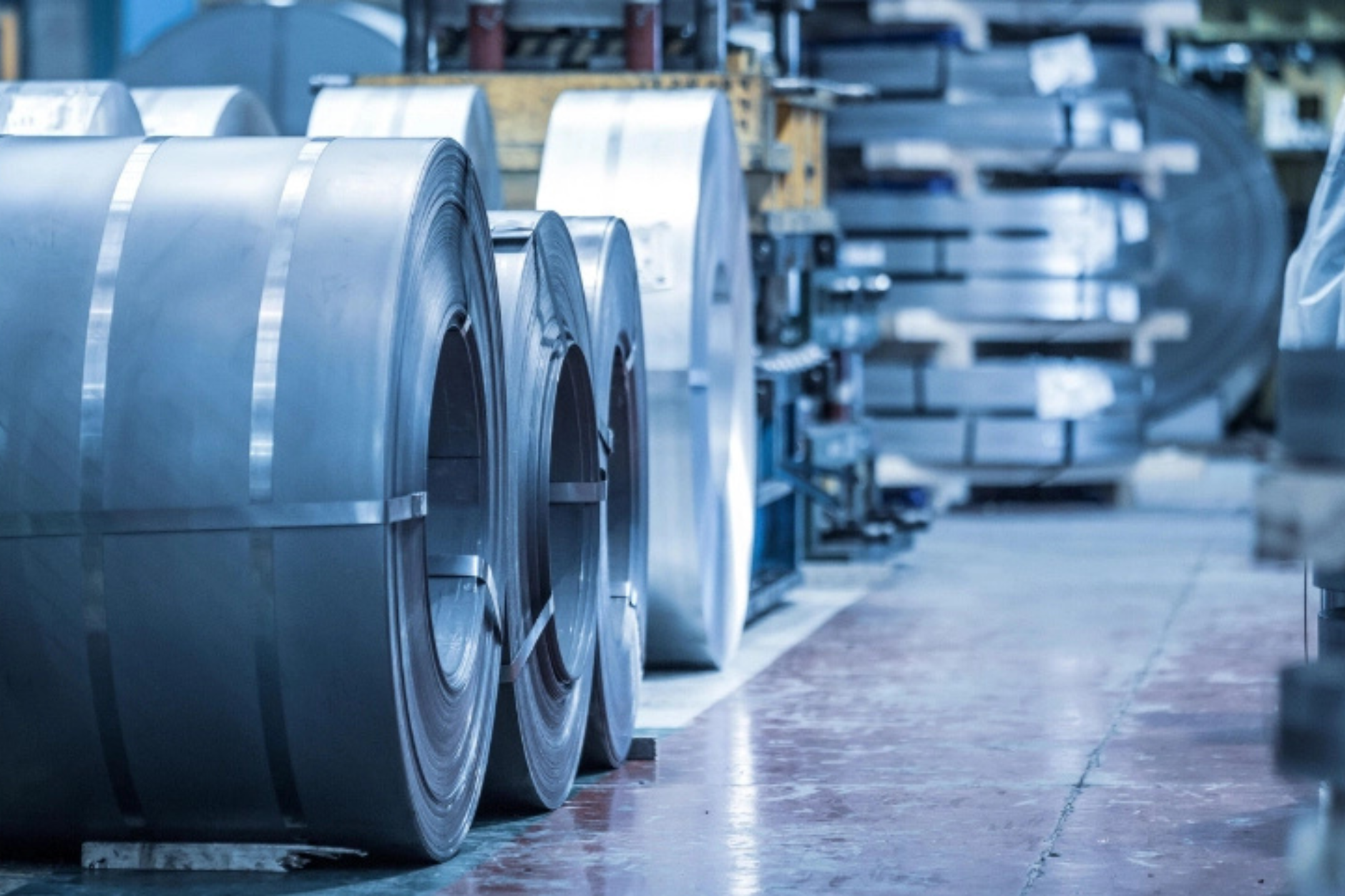
Flat stock cut to size. It is the right route for gaskets, pads, liners, wear strips and anything you can cut from a flat piece. Setup is simple, so it suits one-offs and repeat runs alike. We make every roll to order in your width, Duro and thickness, and the steps are laid out in how to order custom-cut rubber sheet.
Extrusion
The compound is pushed through a shaped opening to make a continuous profile: seals, edge trim, tubing, channel. If the part is the same cross-section along its whole length, extrusion usually beats cutting sheet into strips.
Molding
Rubber is pressed into a cavity and cured in the finished shape. Molding handles three-dimensional parts that sheet cannot make: O-rings, hoses, boots and parts with ribs, lips or undercuts. The tradeoff is tooling. A mold is an upfront investment, which is why prototypes come first.
Stamping
A die cuts the part out of sheet. It is fast and repeatable for flat shapes like washers and gaskets with a fixed outline, and it makes sense once a flat part is running in volume.
Matching the process to the part
Ask these in order:
- Is the part flat? Sheet, then stamping if volume grows.
- Is the cross-section constant along a length? Extrusion.
- Does it have real three-dimensional form? Molding.
- How many will you need, and will it repeat? Low or uncertain quantity favors sheet. Steady quantity justifies a die or a mold.
Many jobs start as cut sheet to prove the compound and fit, then move to a die or mold. We quote custom molded and stamped parts, prototype through production, against your drawing. See our custom parts page for how that works.
Where the technology is moving
The material question keeps shifting under buyers. Regulators and customers are scrutinizing fluoropolymer chemistry, and some buyers are re-checking whether a fluoroelastomer is truly required. We covered that in our guide to PFAS fluoroelastomer gasket alternatives. The short version: confirm the real operating conditions first, then pick the compound. Do not default to the most exotic one.
What to send when you ask for a quote
Four things make a rubber quote quick and accurate: the compound or the conditions it must survive, the width, the Duro and the thickness. For molded or stamped parts, add a drawing. If you are unsure of the compound, describe the temperature, fluids and movement and we will talk it through.
SoCal Rubber is at 3303 E. Miraloma Avenue, Suite 185 in Anaheim, serving Southern California and the U.S. West Coast, and distributors and wholesalers are welcome. There is no stock list and no price list, because every job is quoted individually. You can browse our sheet rubber and rolls, then call (714) 602-6515 or email sales@socalrubber.com with your width, Duro and thickness. We are open Monday to Friday, 9am to 4:30pm Pacific.
SoCal Rubber
Rubber and elastomer supply for the U.S. West Coast since 2021. Rolls, sheets, extrusions and custom-molded parts, cut to your width, Duro and thickness from our Anaheim, CA warehouse. Call (714) 602-6515 or request a quote.