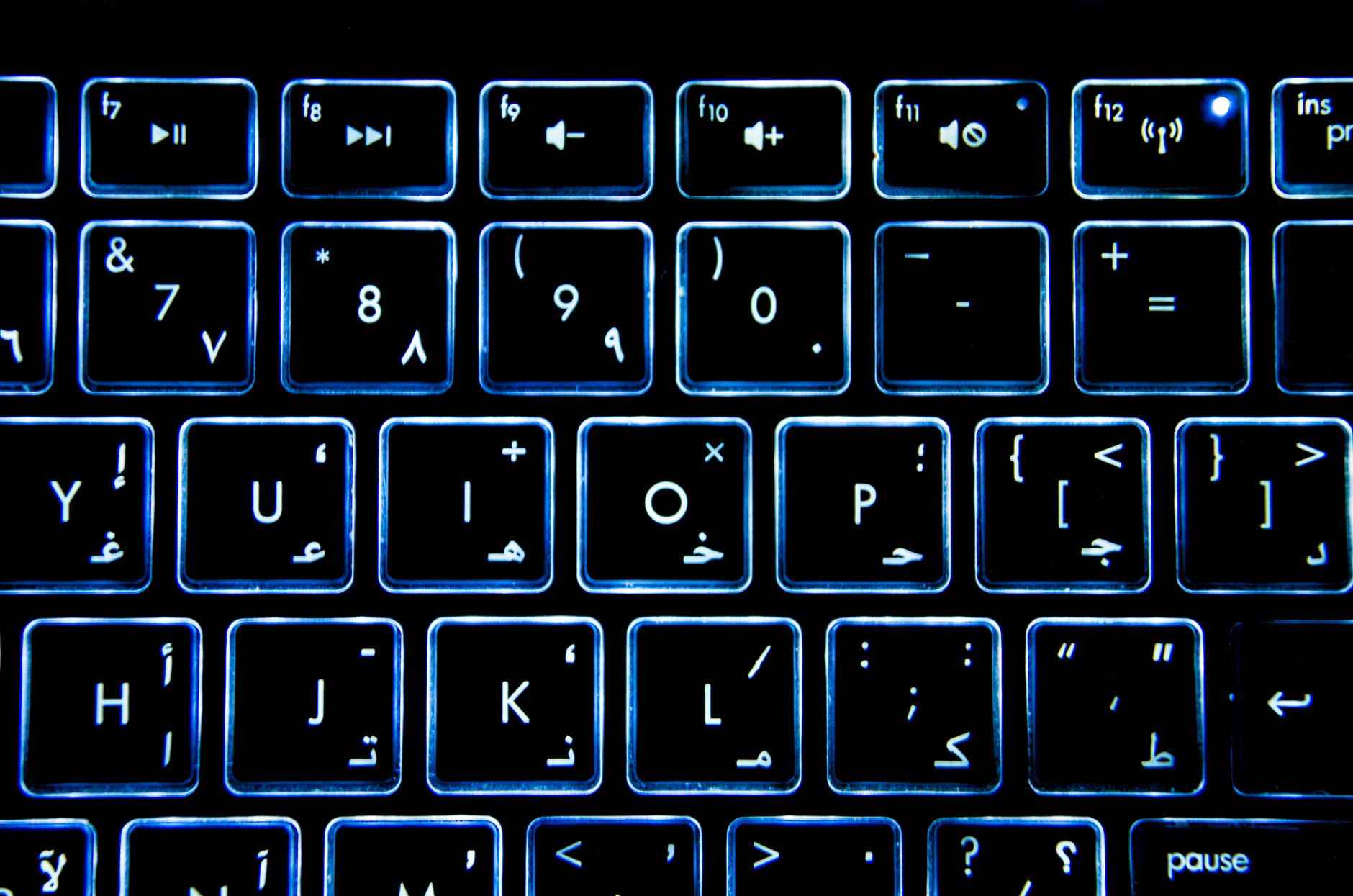
If you are searching for a custom silicone keypad manufacturer with LED backlighting, you probably have a drawing or a prototype and a short list of questions. How does the light get from the LED to the legend? How soft should the key feel? Why does the glow leak around the edges? A good quote request answers most of those before the molder has to ask.
This guide walks through how a backlit silicone keypad is built and which details belong on the spec. It is written for engineers and buyers, not for the brochure.
How a backlit silicone keypad is built
A molded keypad is one sheet of silicone with raised keys, thin webs between them, and a small dome or stem under each key. Press a key and the dome collapses, then springs back. That dome is what you feel as the click.
Under the keypad sits a circuit board. Each key has a contact pad on the board. A conductive carbon pellet, called a pill, is molded into the underside of the key. When the dome collapses, the pill bridges the contacts and the circuit closes. The LEDs sit on the same board, beside or under the keys.
Translucent silicone and how light travels
The key itself is usually molded from translucent or clear silicone. Light from the LED enters the silicone and travels through the key body. Then it exits where you want it: a cut-out legend, a thin window, or the whole key face.
Most molders add color in one of two ways. The silicone is pigmented, or the surface is painted. For a legend that glows, the key is painted opaque and the legend is then laser-etched to expose the silicone beneath. The light shows only through the etched shape.
The thing to tell your molder: how bright should the legend be, and in what color? Brightness depends on the LED, the wall thickness of the silicone, and how much paint sits in the way. State a target, and ask for a sample to judge it by eye.
LED placement and light bleed
Light bleed is the most common complaint on backlit keypads. The glow leaks from one key to its neighbor through the silicone web, or it shows as a bright spot over the LED instead of an even legend.
You control this in three places:
- LED position. Side-firing LEDs under the web can light several keys. A LED centered under each key lights one key cleanly but costs more board space.
- Light guides and barriers. A rigid or molded light guide spreads the light evenly. Opaque or painted webs between keys stop it spilling over.
- Silicone thickness. A thick key body diffuses light. A thin one shows the hot spot.
If bleed matters on your product, say so on the drawing. Do not leave it for the first sample to reveal.
Durometer and actuation force
Durometer is the hardness of the silicone, measured in Shore A. Softer rubber is easier to compress. Harder rubber holds its shape and feels firmer. Actuation force is what the user feels at the moment the dome collapses, and it comes from the dome's geometry as much as the Duro.
Do not specify one and hope for the other. Give both: the Shore A hardness of the silicone and the target actuation force in grams-force, with a tolerance. Include the travel distance too. A short, sharp click and a long, soft press are different parts.
Translucent silicone is also not always the same hardness as the standard grades. Ask the molder what range the clear compound offers before you lock the number. For general background on how compounds are chosen, see our overview of rubber materials and processes.
Carbon pills: size, resistance, and contact life
The pill is easy to forget and hard to fix later. Specify:
- Pill diameter, to match your contact pad on the board.
- Maximum contact resistance the circuit can tolerate.
- Expected number of presses over the life of the product.
- Whether you need a pill at all. Some designs use a metal dome or a membrane switch instead.
Match the pill to the pad. A pill that is too small misses the contacts. One that is too large can short neighboring traces.
Environment and what the keypad has to survive
Silicone handles a wide temperature span, and SoCal Rubber stocks it as one of eight compounds. It is also non-toxic and odorless. But the keypad's environment still shapes the spec. Tell the molder about heat, cleaning chemicals, UV, oils and grease, and whether the keypad will be sealed against water or dust. A coating or paint that works indoors may not hold up on a machine or outdoor panel.
If you are weighing silicone against another elastomer for a seal or a gasket in the same assembly, the custom parts page shows how molded and stamped parts are handled.
What to put in your quote request
Send the molder a package they can quote from without guessing:
- A drawing with key layout, key height, web thickness and tolerances.
- Silicone Duro (Shore A) and the target actuation force and travel.
- Legend artwork, color and brightness target.
- LED type, count and position, or the board file.
- Carbon pill size and resistance limit.
- Quantity: prototype run, or production, or both.
- Operating environment: temperature, chemicals, cleaning.
A prototype run lets you test feel and light before you commit to production tooling. SoCal Rubber's custom molded and stamped parts run prototype through production and are quoted against your drawing. Every job is quoted individually, so a complete package gets you an answer faster. The same discipline applies to sheet stock, as in our guide to ordering custom-cut rubber by width, Duro and thickness.
Next step
If you have a keypad drawing or a sample you want matched, send it with the Duro and thickness you have in mind. We are at 3303 E. Miraloma Avenue, Suite 185 in Anaheim, serving Southern California and the West Coast, Monday to Friday, 9am to 4:30pm Pacific. Call (714) 602-6515 or write sales@socalrubber.com, and we will talk through it with you.
SoCal Rubber
Rubber and elastomer supply for the U.S. West Coast since 2021. Rolls, sheets, extrusions and custom-molded parts, cut to your width, Duro and thickness from our Anaheim, CA warehouse. Call (714) 602-6515 or request a quote.