Searching for anaheim rubber usually means one of two things. You have a job on the bench and need material, or you are lining up suppliers before the new year. Either way, the supplier you pick is only as useful as the questions you ask it.
This is a short checklist from the cutting floor. Work through it before you request a quote and you will save yourself a round of back-and-forth emails.
Start with the material, not the product name
"Rubber sheet" is not a spec. Neoprene, nitrile, EPDM, silicone, Viton, SBR, red rubber and natural gum rubber behave very differently. Match the compound to what the part will touch and the temperatures it will see.
- EPDM: -40°F to 270°F. A common choice for weather, water and outdoor sealing. Keep it away from petroleum oils.
- Neoprene: -30°F to 250°F. A general-purpose workhorse.
- Nitrile: -30°F to 250°F. The usual pick where oils and fuels are involved.
- Viton: -30°F to 540°F. For heat and harsh chemicals, when the budget allows.
- Silicone: non-toxic and odorless. The site describes it as perfect for food and beverage.
Ask any supplier to confirm the compound and the temperature range in writing. If they cannot say what the range is, keep looking. The materials and processes guide goes deeper on how these compounds differ.
Know your durometer
Durometer is hardness on the Shore A scale. A softer 35 to 50 Duro compresses easily and conforms to uneven flanges. A harder 70 to 85 Duro holds its shape under load and resists wear. We work in the 35° to 85° Shore A range.
If you are unsure, tell the supplier what the part does. "Seals against a rough steel flange at low bolt load" is more useful than a guess at a number. We would rather help you pick the Duro than sell you the wrong one.
Ask what "cut to order" really means
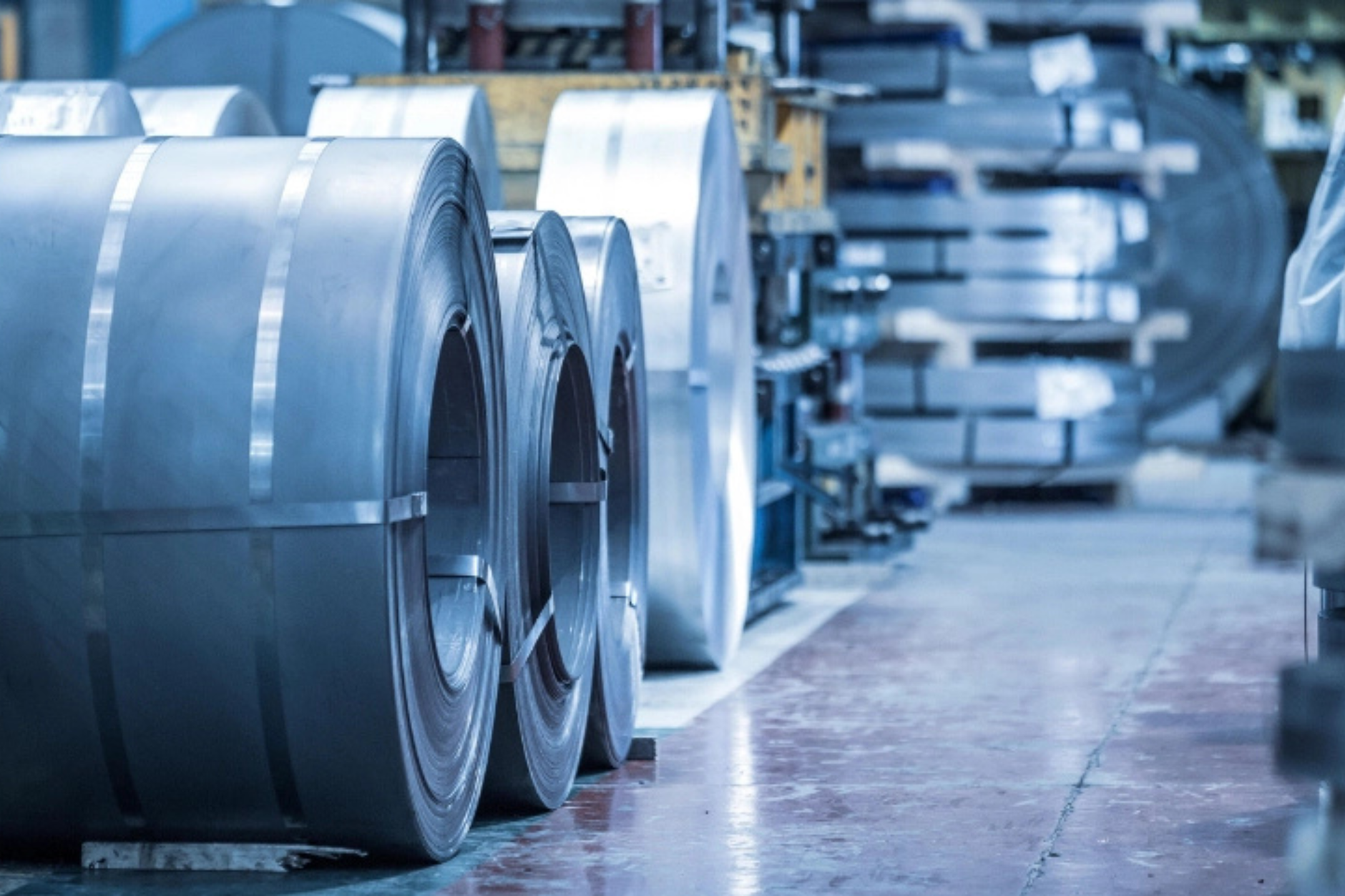
This is where suppliers differ most. Some sell fixed rolls and fixed widths. Others cut to what you need. At SoCal Rubber, every roll is made to order in the customer's width, Duro and thickness. There is no stock list and no price list, so every job starts with your numbers.
When you talk to any supplier, ask these questions:
- Can they cut the width you need, or only a standard one?
- Do they cut to length, or sell the full roll?
- Can they supply a tolerance on thickness?
- Do they offer fabric insertion, such as SBR with fabric insertion rated -20°C to 80°C?
Our walkthrough on ordering custom-cut rubber sheet shows how width, Duro and thickness fit together.
Sheet, extrusion or custom part?
Plenty of buyers searching for anaheim rubber need something other than flat sheet. Think about which form fits the job:
- Sheet and rolls for gaskets you cut yourself, pads, liners and wear surfaces.
- Extrusions for edge trim, seals and profiles.
- Custom molded or stamped parts such as gaskets, O-rings and hoses, from prototype through production, quoted against your drawing.
We also supply PVC strip curtains, wheel stops, speed bumps and gym flooring. If you are not sure which form you need, ask. A good supplier will say so when a stamped gasket will serve you better than a hand-cut one. See the custom parts cut to order page for what we make.
Pickup or shipping: ask early
Local does not always mean you can walk in and load a truck. Ask each supplier whether they handle pickup, delivery or shipping, and how a made-to-order job gets to you. Do not assume.
Our warehouse and office are at 3303 E. Miraloma Avenue, Suite 185, Anaheim, CA 92806. We serve Southern California and the U.S. West Coast, and distributors and wholesalers are welcome. Our hours are Monday to Friday, 9am to 4:30pm Pacific. We also keep limited neoprene overstock at the warehouse. Quantities change, so call first rather than driving over.
What to have ready for a quote
A quote moves fast when the request is complete. Gather this before you call or fill out the form:
- Material, or the job conditions if you want a recommendation: temperature, oil, water, outdoor exposure, food contact.
- Durometer, or what the part has to do.
- Width, thickness and length or quantity.
- Whether it is a one-off, a prototype or a production run.
- A drawing, sketch or sample for any molded or stamped part.
- Where it needs to go, and whether you plan to pick it up or have it shipped.
Every job is quoted individually, so expect a number tied to your spec. Be wary of any supplier that quotes before it knows your width, Duro and thickness.
Check the fit before you commit
Before you place an order, read back the compound, the Duro, the width and thickness, and the quantity. Confirm them against your drawing. Most ordering mistakes are a wrong thickness or a compound that does not suit the fluid. Both are cheap to catch before cutting and expensive afterward.
If you would like a second set of eyes on your spec, send us the details or call (714) 602-6515. Give us the width, Duro and thickness, and we will quote it from there.
SoCal Rubber
Rubber and elastomer supply for the U.S. West Coast since 2021. Rolls, sheets, extrusions and custom-molded parts, cut to your width, Duro and thickness from our Anaheim, CA warehouse. Call (714) 602-6515 or request a quote.